About
Twenty-one years of getting metal to behave
Everest Heat Treaters is a commercial heat treatment works in Nazarathpettai, on the western edge of Chennai. Manufacturers across the country send us components and we return them harder, tougher or softer — whatever the specification asks for — with the documentation to prove it. We have been doing this since 2005, for ferrous and non-ferrous metals alike.
The plant runs a bogie hearth furnace for long and heavy work, gas carburising and tempering pit furnaces, and a deep pit furnace for parts up to two metres long, with charges of 800 to 1,000 kg. Quenching is done in an oil tank and a water tank, each stirred by an impeller so the whole charge cools evenly. Two-tonne cranes move the work, and two gensets, a 125 kVA Kirloskar GenLight and a 45 kVA Powerica, back up the power. Around 200 tonnes a month goes through.
Most heat treatment problems arrive as a part that cracked, distorted or came out soft, and the answer usually sits in the steel grade, a section change, a sharp corner or a specification that was never right for the application. We would much rather have that conversation before the batch runs. If your drawing specifies a treatment that will struggle to do what you need, you will hear it from us early.
The team
The people who run the works
The same team has run the floor for years, and you will deal with them directly.
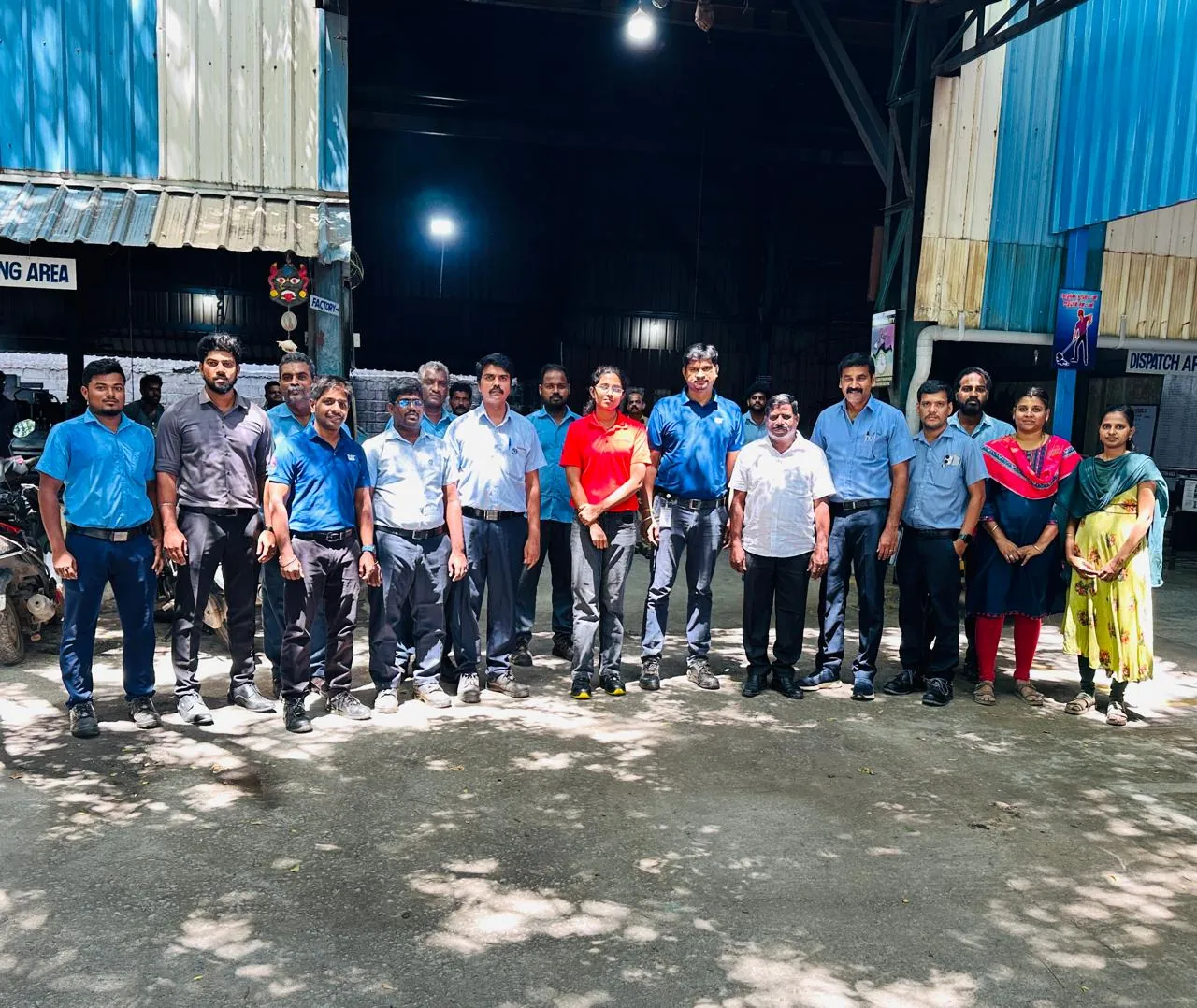
- R. SathyamoorthyProprietor & Managing Director
- S. AravindthMetallurgist
- A. SelvamQuality In-charge
- Saravana PandianProduction In-charge
- T. R. ThiyagarajanMaintenance
The plant
Furnaces and sizes
What each furnace takes. Charges run from 800 to 1,000 kg, and every furnace is calibrated by an NABL-accredited lab.
| Equipment | Size | Used for |
|---|---|---|
| Bogie hearth furnace | 3000 L × 900 W × 450 H mm | Long, heavy and welded work |
| Pit furnace, gas carburising | 800 dia × 1200 mm | Case hardening |
| Pit furnace, gas carburising | 700 dia × 1200 mm | Case hardening |
| Pit furnace, tempering | 800 dia × 1200 mm | Tempering |
| Pit furnace, tempering | 700 dia × 1200 mm | Tempering |
| Deep pit furnace | 700 dia × 2000 mm | Long shafts and bars |
| Quench tanks | Oil and water | Impeller agitated |
| Heat exchanger | Oil quench | Keeps the quench oil at temperature |
| Cooling tower | Water circuit | Cools the quench water |
| Power backup | 125 kVA + 45 kVA | Kirloskar GenLight and Powerica gensets |
Safety
Safety on the floor
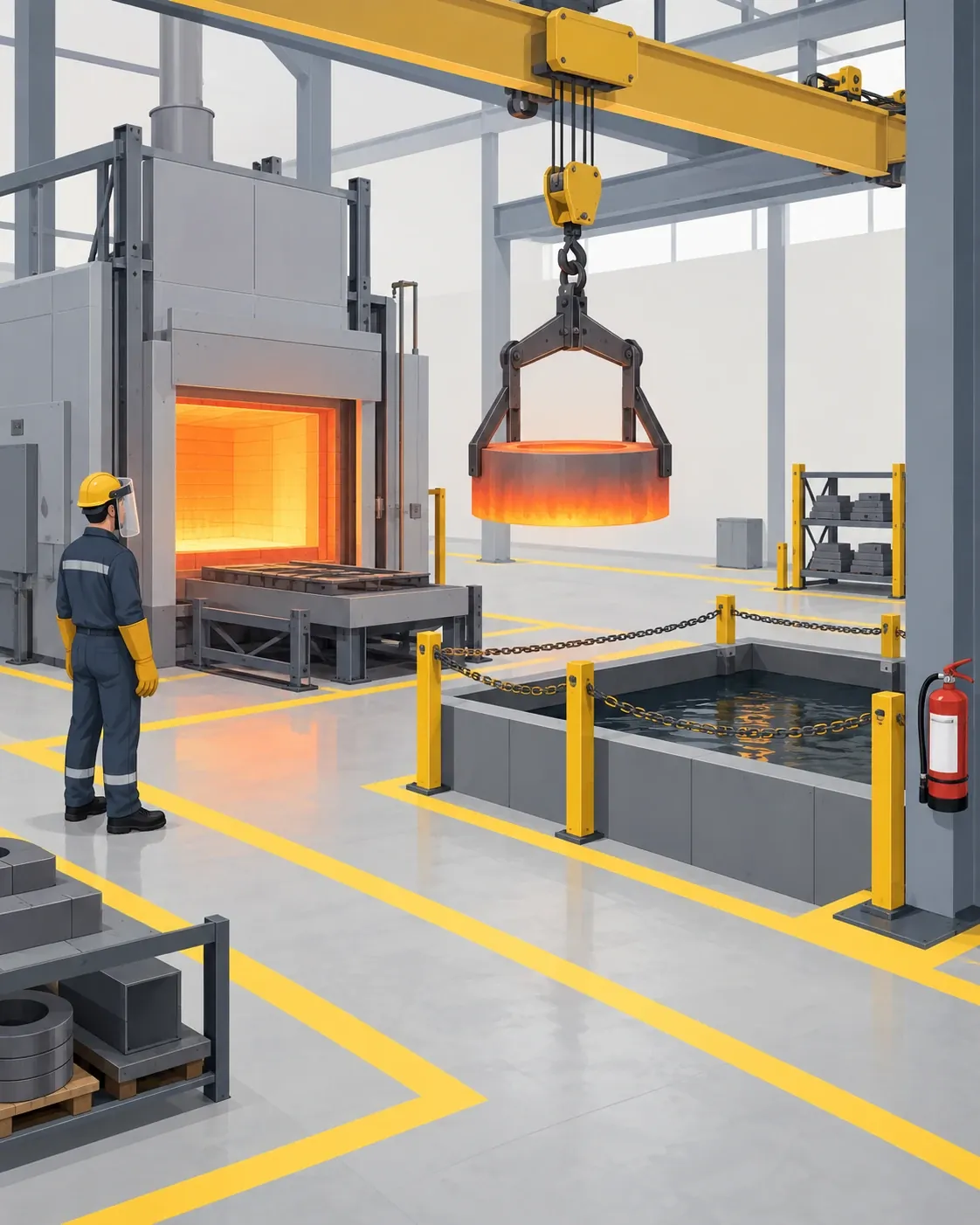
A heat treatment shop works with furnaces near 1,000°C, tanks of quench oil and loads lifted by crane. Our aim is on the board at the factory entrance, and zero accidents is the first line on it.
Protective gear
Heat-resistant gloves, safety shoes and face protection for anyone loading a furnace or working at the quench.
Guarded pits and tanks
Furnace pits and quench tanks are fenced with posts and chains, and walkways are marked in yellow.
Lifting by crane
Hot and heavy charges move only on the two-tonne cranes, on rated hooks and fixtures, never by hand.
Fire readiness
Extinguishers are kept at the furnaces and the quench tanks, and the team knows where each one is.
Maintained equipment
Furnaces, cranes and electrical panels are checked on schedule by our maintenance team.
Clear housekeeping
Receiving, process, inspection and dispatch each have their own marked area, so work never piles up in a walkway.
Industrial visits
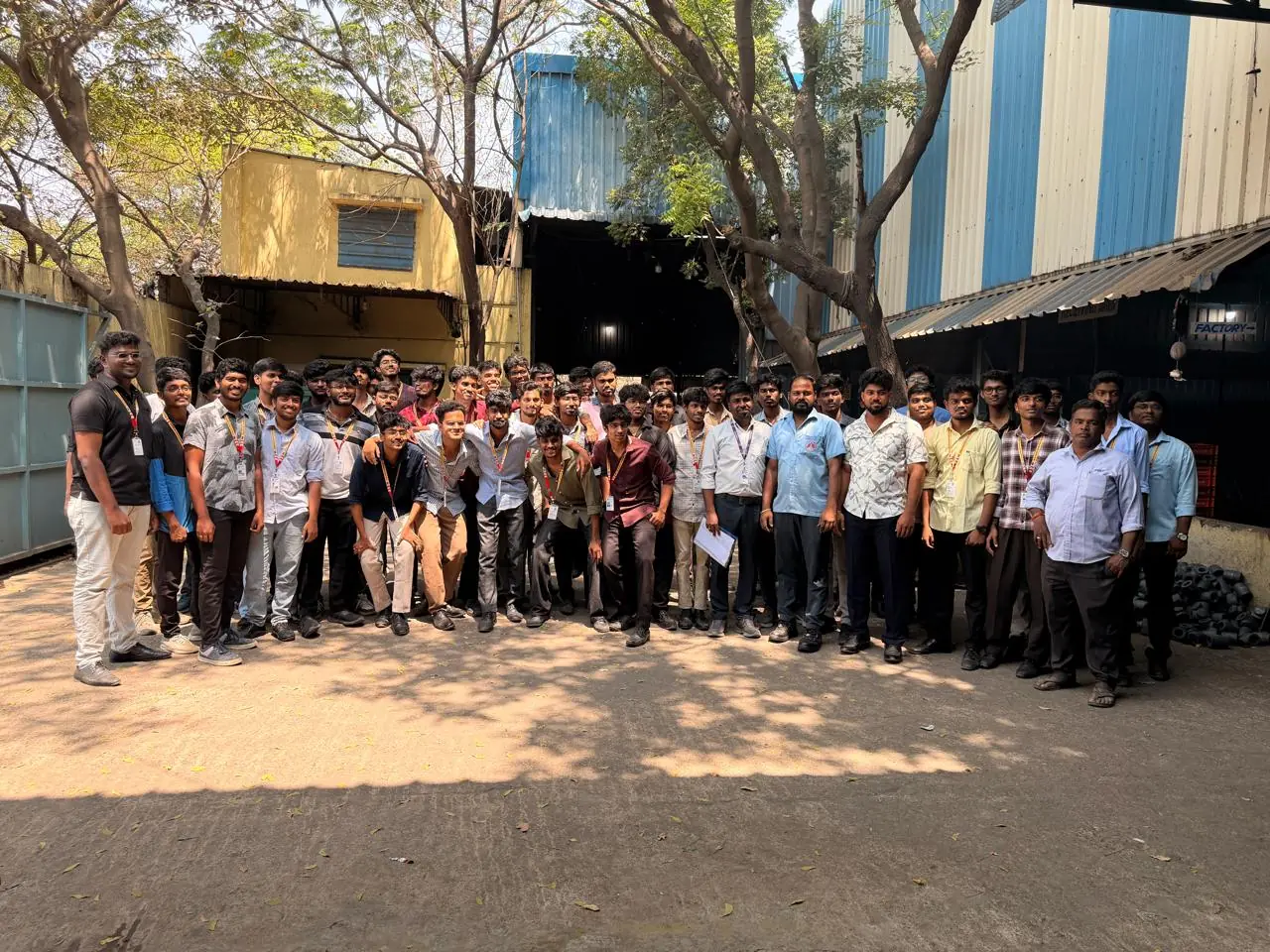
Industrial visits, every year
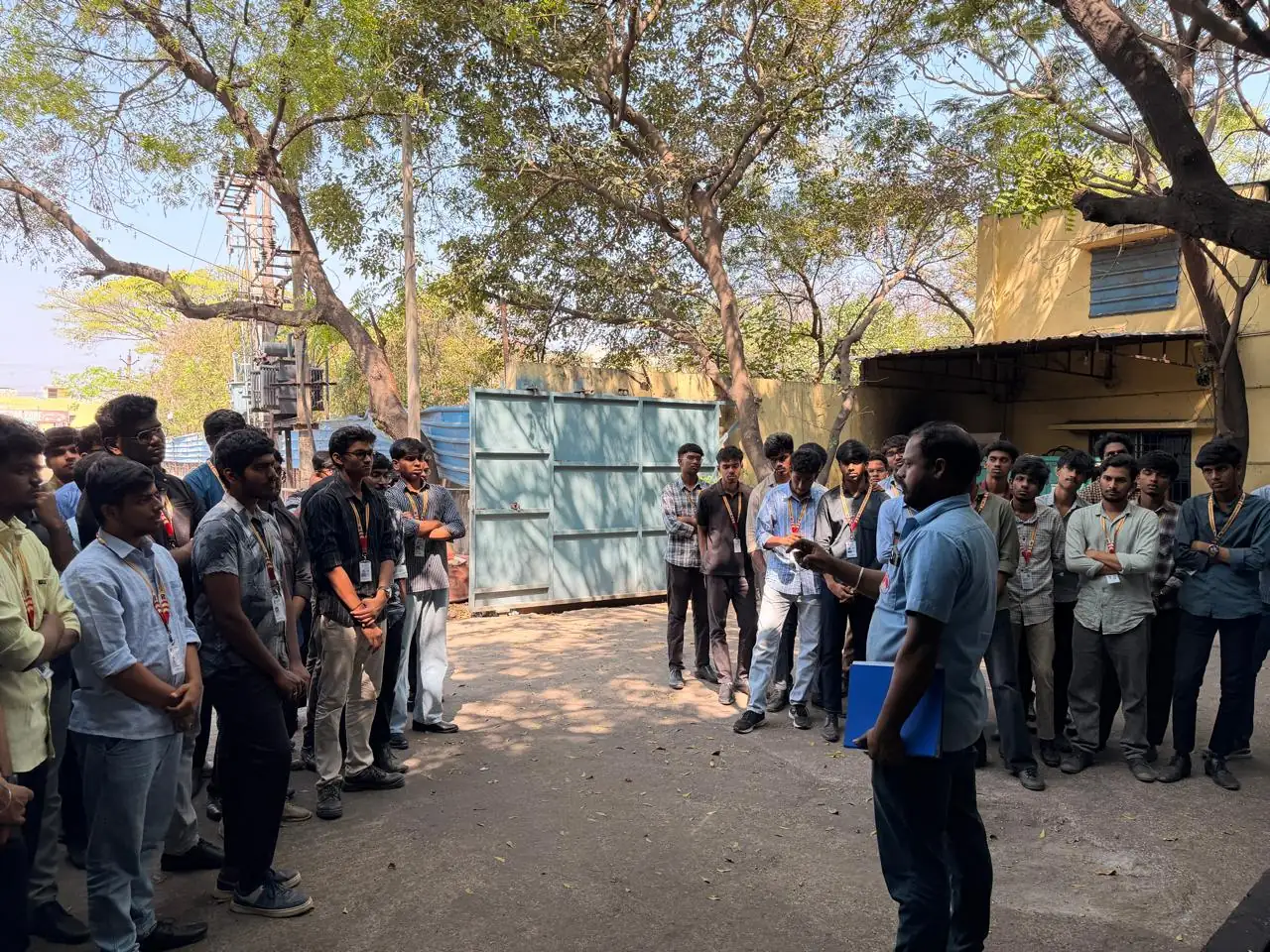
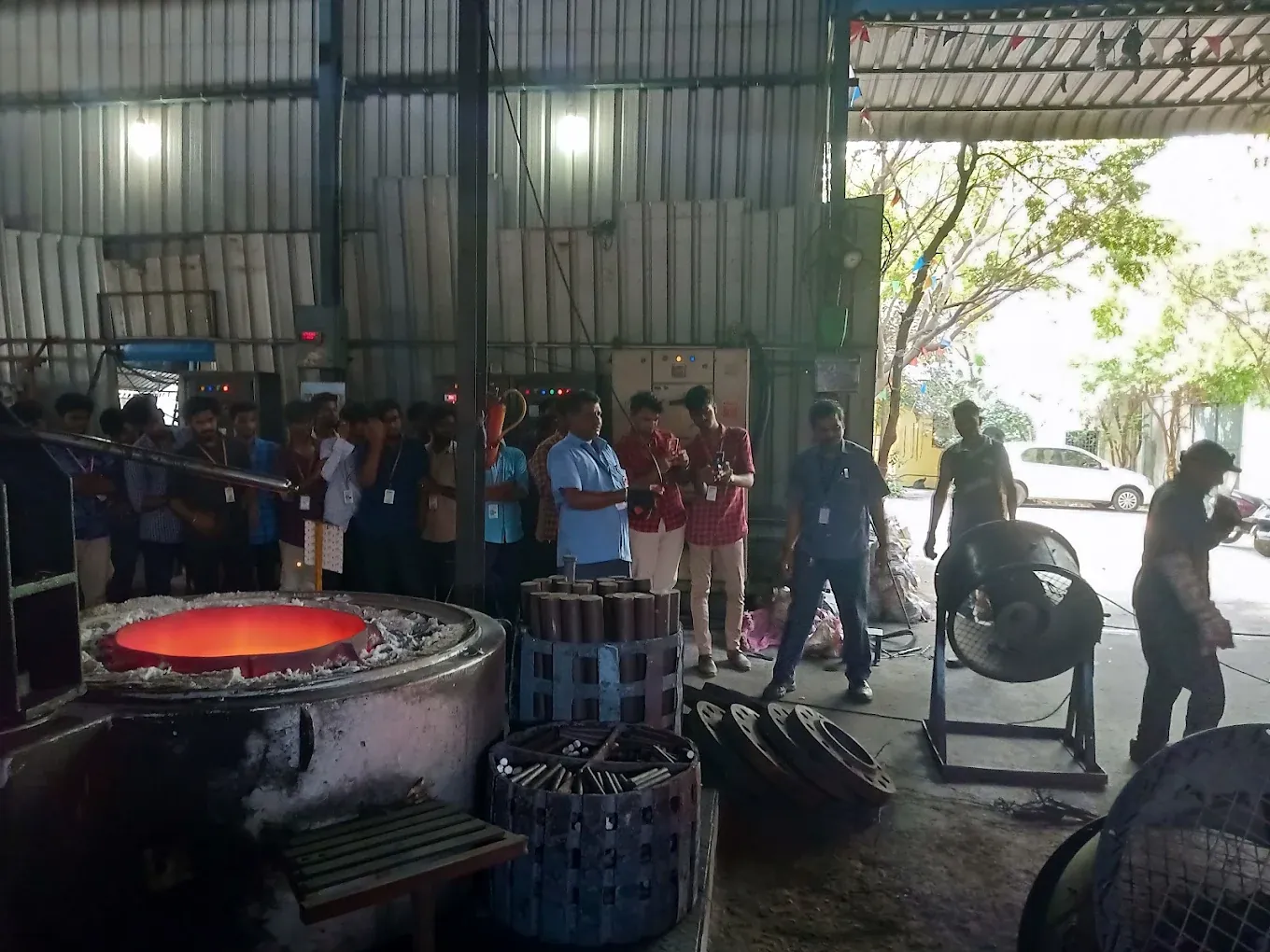
Every year engineering students visit the works to see heat treatment happen for real: a charge lifted out glowing, the quench, and the hardness test that proves it. Our metallurgist walks them through each step on the floor.
How we work
Three things we hold to
Advice before the batch runs
If the spec looks wrong for the application, we say so while it is still cheap to change.
Every batch documented
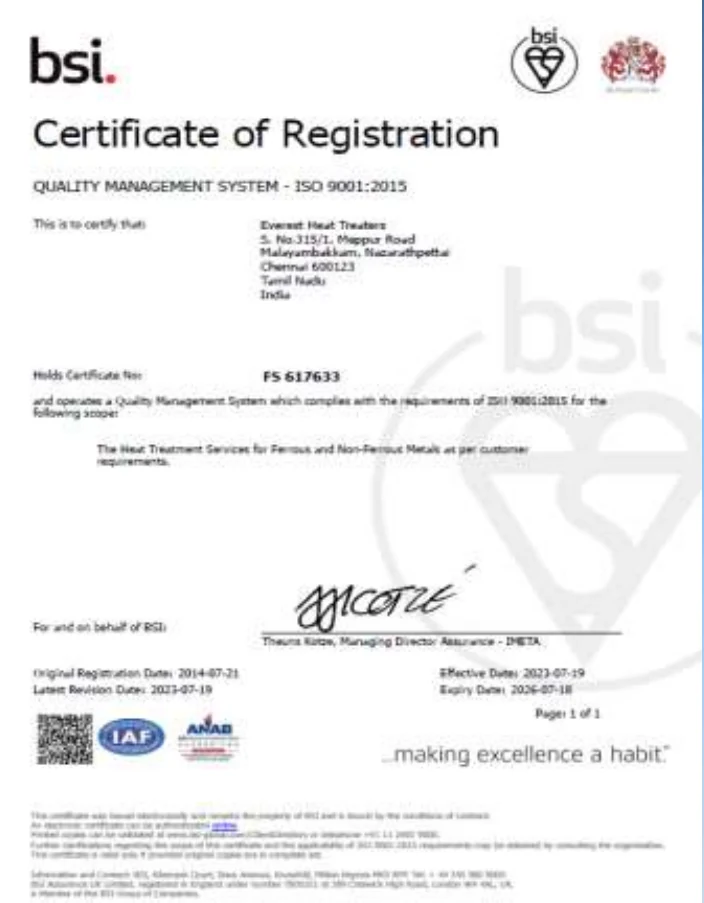
ISO 9001:2015 since 2006, with a hardness report on every delivery.
Built for job work
One prototype or a thousand pieces, treated on the same recorded cycle.
Certification
On the record
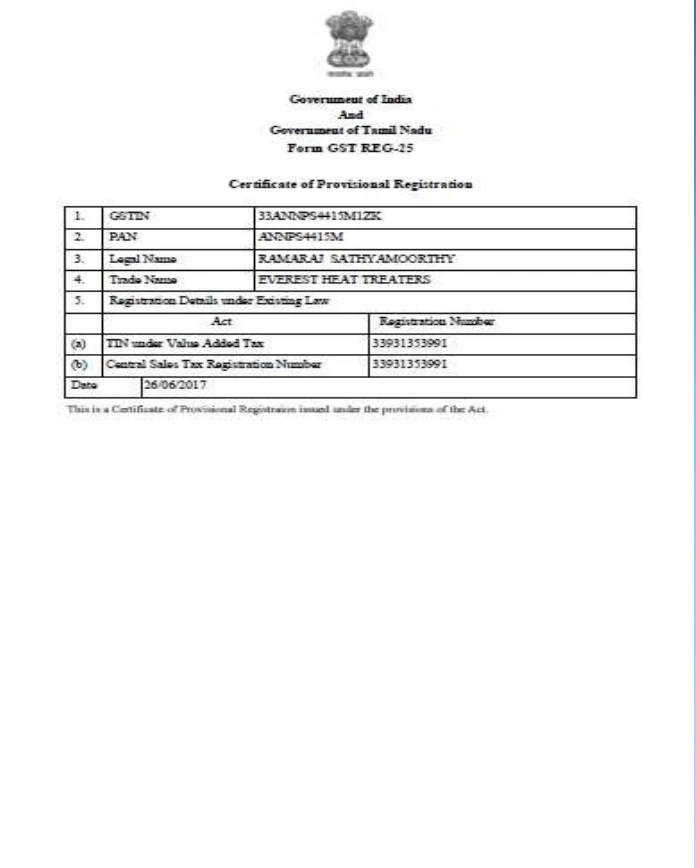
The registration and the certificate, as issued. ISO 9001:2015 through BSI, held since 2006 and audited every year since.
Where we are going
What we are aiming at
Vision
To be the heat treatment business this industry measures itself against, through better technology, better process control and a standard of work that holds across every function.
And to build partnerships with our customers and our suppliers that are worth keeping for decades.
Mission
Complete customer satisfaction, earned the only way it can be: by delivering the highest quality in every component we treat and every service we put our name to.
We get there by holding to the three principles the company was founded on — integrity, quality and innovation.
Our promise
Two decades on the furnace floor mean we can reach the hardness your part needs, whatever the grade and whatever the specification.
If you have the material and the requirement, you are in the right place. Bring both, and we will take it from there.
Contact
Send us the grade and the hardness.
We will get back to you soon.